


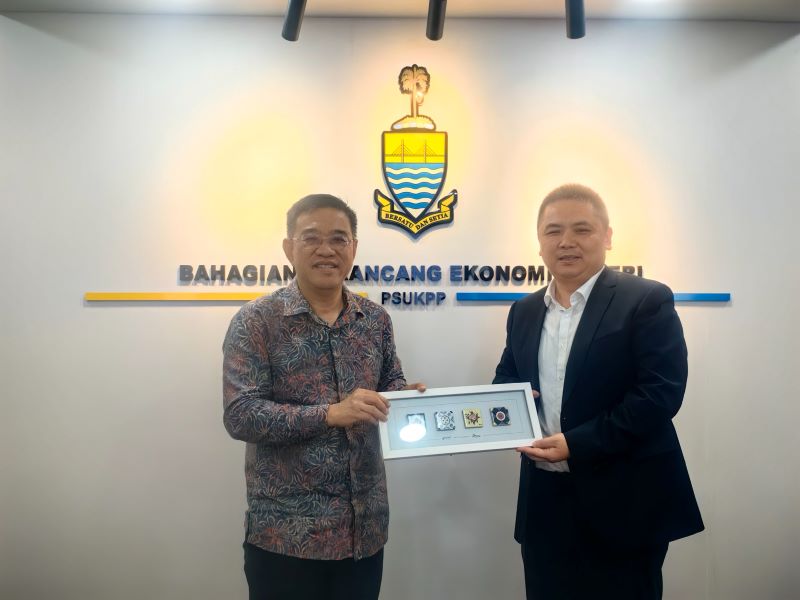
A delegation from Anhui Province, China made an official visit to Penang rcently.
They also paid a courtesy all on Penang State Executive Councillor for Tourism and Creative Economy, Wong Hon Wai.
The delegation was led by Mr Gui Dapeng, Deputy Director of the Protocol Division of the Foreign Affairs Office of the People’s Government of Anhui Province. The meeting provided a valuable platform for both sides to engage in constructive discussions and explore future collaboration opportunities between Penang and Anhui.
The visit follows a series of growing engagements between Penang and Anhui. In April 2025, Anhui Governor Wang Qingxian led a delegation to Penang, during which both parties signed a Memorandum of Understanding on Strengthening Cooperation. Subsequently, in November 2025, Penang Chief Minister Chow Kon Yeow led an official delegation to Hefei, Anhui Province, further expanding avenues for cooperation between Penang and Chinese enterprises. In February 2026, the Anhui Provincial Department of Culture and Tourism organised the “Happy Chinese New Year – Beautiful Anhui in Penang” Cultural and Tourism Promotion Event at Penang Waterfront Convention Centre.
Wong highlighted that Anhui, as one of China’s key inland provinces, possesses diverse geographical features comprising plains, hills and mountainous terrain, providing a strong foundation for traditional Chinese medicine (TCM) resources. Penang, meanwhile, has established itself as one of Southeast Asia’s leading medical tourism destinations through its comprehensive healthcare ecosystem, high-quality medical facilities and internationally recognised healthcare services.
“Anhui and Penang each possess distinct strengths in traditional Chinese medicine resources and modern medical tourism. By leveraging these complementary advantages, both sides can explore new opportunities and unlock greater potential for collaboration in the healthcare and medical tourism sectors,” he said.
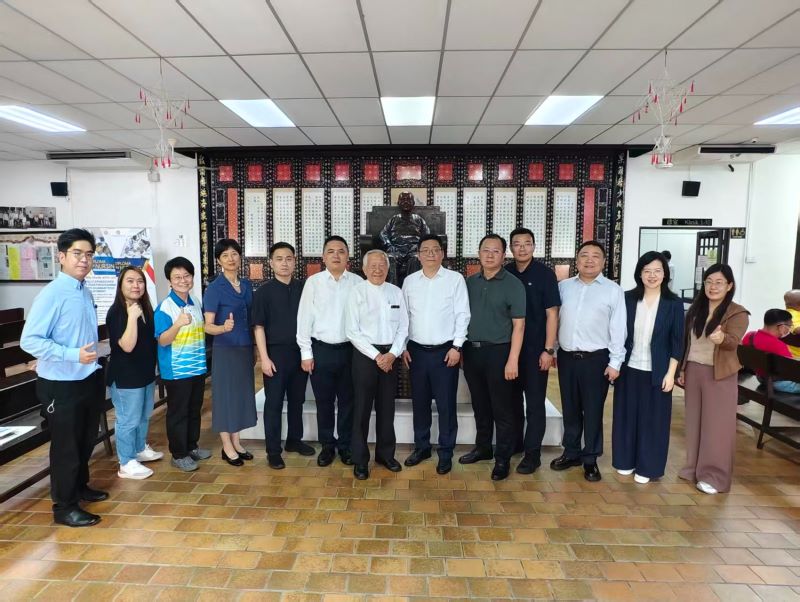
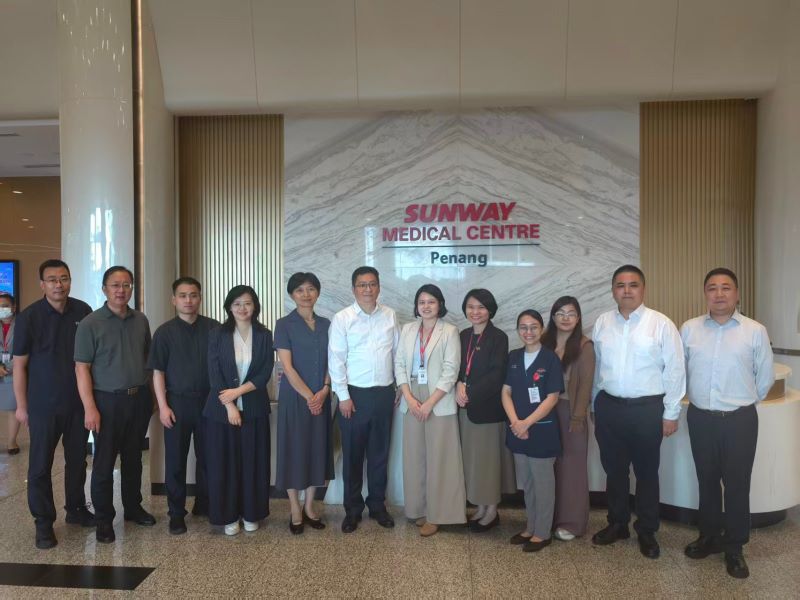
To facilitate greater understanding and cooperation, the Penang State Government arranged visits for the Anhui delegation to several healthcare institutions across Penang Island and Seberang Perai, including Lam Wah Ee Hospital, which has a long-established Traditional Chinese Medicine Department, and Sunway Medical Centre Penang, a recognised medical tourism destination.
“These visits provide the delegation with first-hand exposure to Penang’s healthcare capabilities and offer opportunities to identify areas for future collaboration in medical tourism between Anhui and Penang,” Wong added.
“Besides exploring the possibility of establishing direct air links between Anhui and Penang, both sides exchanged views on strengthening existing aviation networks. This includes encouraging travellers from Anhui to connect via major Chinese cities that already enjoy direct flights to Penang, such as Shanghai, Guangzhou and Xiamen,” he said.
Both parties further discussed promoting seamless transit options and improving flight connectivity to facilitate more convenient and frequent travel, thereby strengthening tourism exchanges and people-to-people connections between the two destinations.
Wong also highlighted the strong tourism and cultural complementarity shared by Anhui and Penang.
“Anhui is home to the world-renowned Huangshan Mountain, famously praised by the Ming Dynasty traveller and geographer Xu Xiake, who remarked that ‘After seeing the Five Great Mountains, no other mountains are worth seeing; after seeing Huangshan, even the Five Great Mountains pale in comparison.’ Penang, on the other hand, continues to attract visitors from around the world with its scenic coastline, multicultural heritage and distinctive historical architecture that reflects the rich legacy of the South East Asia region,” he said.
On cultural heritage, Wong noted that Anhui is renowned for cultural treasures such as Huangmei Opera, Hui Opera, traditional Xuan paper-making techniques and abacus craftsmanship. Penang, meanwhile, is home to cultural heritage elements including the Chingay and Kebaya, both of which embody the historical memory and cultural identity of the region.
“Through deeper cultural and tourism exchanges, both sides can strengthen mutual understanding, promote cultural appreciation and further advance tourism development,” he added.