


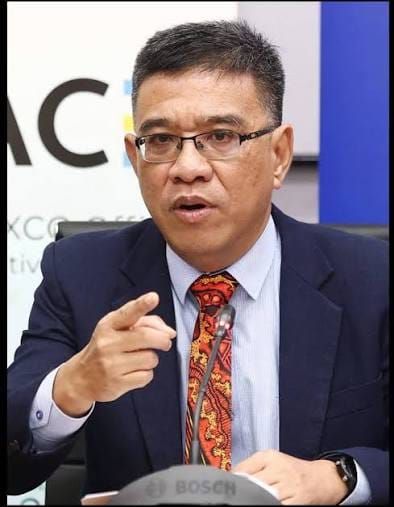

Following the recent release of the Domestic Tourism Survey 2025 by the Department of Statistics Malaysia (DOSM), Penang State EXCO for Tourism and Creative Economy YB Wong Hon Wai issued a statement responding to questions raised.
“The Domestic Tourism Survey 2025 published by the Department of Statistics Malaysia under the Ministry of Economy is essentially a sample survey. The data obtained are not actual hotel stay records, but are derived from sampling models and questionnaire responses. This is standard practice in statistical research, but the accuracy of the findings depends on the sample size used.”
“According to the report, only 2,830 Enumeration Blocks were selected as samples across Malaysia’s 13 states and three Federal Territories. Penang accounted for only 205 sample blocks, which represents a relatively small proportion.
“While sampling methods have statistical value, they should not be used to draw broad conclusions. A limited sample size may not accurately reflect the actual situation, let alone provide a detailed picture of the tourism industry’s performance.”
He shared : “In contrast, hotel accommodation data are actual records and therefore provide a more reliable point of reference. According to the official Tourism Malaysia data published in 2025, Penang recorded 8.76 million hotel guests, comprising 5.29 million domestic tourists and 3.47 million international tourists. As a geographically small state, Penang ranked fifth in Malaysia in terms of total hotel guests, behind Kuala Lumpur, Pahang, Johor and Selangor. In terms of international hotel guests, Penang ranked third, behind only Kuala Lumpur and Selangor.”
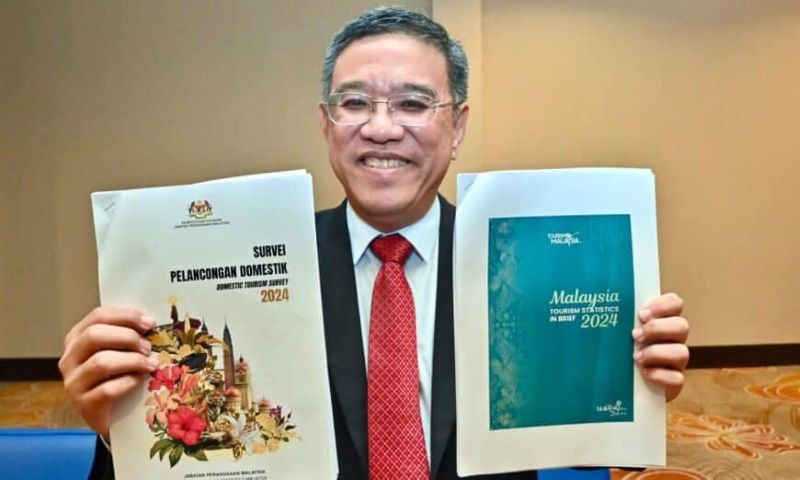
Wong added: “The survey also has methodological limitations. According to DOSM’s explanation, the primary respondents for the Domestic Tourism Survey 2025 were households in each state. The survey relies on respondents recalling which states they visited over the past year, rather than directly tracking where visitors actually arrived. As such, the data collected are retrospective and subjective, rather than real-time records.”
“More importantly, the survey was not conducted at airports, hotels or tourist attractions where visitors are concentrated. Instead, it uses households as the sampling unit. For a high-density tourism destination like Penang, this approach may result in the actual number of visitors being undercounted.”
Wong explained that according to the Department of Statistics Malaysia’s classification, the term domestic visitor does not refer only to those who stay overnight at a destination. It includes all residents who travel outside their usual place of residence across state boundaries. Domestic visitors are divided into two categories: tourists, who stay at least one night at the destination, and excursionists (day-trippers), who travel to another state and return on the same day without staying overnight.
“Therefore, the figures published by DOSM also include people returning to their hometowns to visit family. In fact, 35.6% of trips were made to visit relatives or friends, while 56.2% of travellers stayed at the homes of relatives or friends. For example, during the Hari Raya Aidilfitri celebrations, many Malaysians return to their hometowns. Although these involve interstate travel, the primary purpose is not tourism. Conceptually, returning to one’s hometown is different from leisure tourism.”
“The Domestic Tourism Survey 2025 shows that day-trippers accounted for 67% of the total sample, representing a very large majority. However, these visitors typically stay only briefly, do not check into hotels, and generally spend less, making them difficult to capture through tourism industry data. Although their direct economic contribution is limited, they make up a large proportion of the total visitor statistics. As a result, visitor numbers in some states may appear higher, while destinations like Penang, which focus on overnight tourism and immersive travel experiences, may appear to perform less well.” he said.
In concluding, Wong added that – “Overall, the data published by the Department of Statistics Malaysia have value as a reference for understanding tourism trends. However, due to the limitations of the survey methodology, sample size and definitions used, they cannot fully reflect the actual performance of tourism destinations. This is especially true for a state like Penang, which is renowned for its overnight tourism experiences, cultural heritage, arts and festivals. Its attractiveness and economic contribution cannot be assessed solely on the basis of a single questionnaire-based survey.”